
Chiefly helps Augusta University’s family medicine residency navigate a 30% complement increase
Augusta University’s family medicine residency went from 35 residents to 49 in one build, as Eisenhower Army Medical Center’s residents joined its calendar. The two people who build it changed rules and re-ran the calendar themselves, finished in weeks instead of months, and never waited on an email when they needed to change.

Augusta University’s family medicine residency built its 49-resident rotation calendar on Chiefly through a difficult year: 14 residents arriving from Eisenhower Army Medical Center. The two people who build it changed rules and re-ran the calendar themselves, without one re-run request to Chiefly, and finished in weeks instead of months.
At a glance

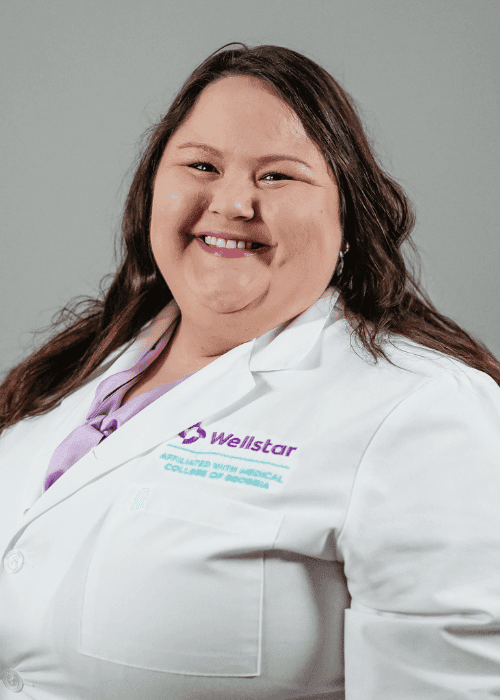
Augusta’s rotation calendar is built by two people, and this story is told in their words. Patrick Hatch, IT Project Coordinator. N. Allie Doles, DO, MSMEd, Assistant Professor and Medical Director of the Family & Community Medicine Clinic, redid the intern schedule as a third-year resident, and the job stayed with her. Together they have built the calendar for three years, with this year on Chiefly. We spoke with them in October 2026.
- Program
- Family and Community Medicine Residency, Medical College of Georgia at Augusta University
- Who builds the calendar
- Patrick Hatch (IT project coordinator) and Dr. Allie Doles (faculty, former chief resident)
- Residents
- 49: 35 from Augusta plus 14 from Eisenhower Army Medical Center
- Before Chiefly
- A spreadsheet, two people, days in a locked room; 50 to 100 hours in a normal year, 200 to 300 for this year’s expansion
- On Chiefly since
- The 2026-27 build, their first on Chiefly
- Re-run requests to Chiefly
- None; able to re-run all changes instantly through Chiefly’s intuitive platform
Why did Augusta’s rotation calendar take until July?
For years, the residency section built Augusta’s rotation calendar in a spreadsheet, and it rarely landed before July. That mattered beyond the residency, because the clinic could not build its own daily schedule until the rotation calendar was done.
“The clinical schedule is fully dependent on the rotation calendar. I don’t know how many residents I have to put in clinic until I know what rotations they’re on.”
Patrick Hatch, IT Project CoordinatorThe residency section would not start until Match results arrived in mid-March, and often not until April. Some years the clinic had no patient slots open until the month had already started. Three years ago, clinical operations took over the build. It got faster. It did not get easier.
“Prior to Chiefly, you literally locked yourself in a room and nobody talked to you for days, because you have to play puzzle master Tetris in your head. Not to mention all the nights I couldn’t sleep. We were all dreaming in the colors of the master schedule.”
N. Allie Doles, DO, MSMEd, Assistant Professor and Medical Director, Family & Community Medicine ClinicGetting an initial rough draft down was the easy part. If Chiefly just did that, it wouldn’t have been enough. The weeks after it were the hard part, and that’s where Chiefly shines, because every fix to one rotation broke the staffing on another.
“It gets more and more complicated and more and more time consuming the closer you get to the end.”
Patrick Hatch, IT Project CoordinatorBy their estimate, a normal year cost 50 to 100 hours of focused work from two people, plus the lost sleep. That is the pattern in most programs: chiefs and coordinators build the calendar by hand, with no training and a new class every year (how chiefs build the block schedule).
How Chiefly changed things for the 2026-27 build
2026-27 was a difficult build. Fourteen residents arrived from Eisenhower Army Medical Center, whose family medicine residency moved under the Medical College of Georgia on July 1, 2026 (WRDW). Overnight, 35 residents became 49.
The new residents brought rotations Augusta had never scheduled, such as OB at Campbell, and services like sports medicine had to take more people than before. Patrick and Allie handled all of it themselves: they changed the limits in Chiefly and re-ran the calendar.
“Keeping up with all of those individual nuances is a lot. Chiefly helped to really put that in one place and take the onus off of having to remember all of these things, in addition to the constant changes.”
N. Allie Doles, DO, MSMEd, Assistant Professor and Medical Director, Family & Community Medicine Clinic“Almost a 30% increase in the number of residents we had to manage. It would have been so much more complex to build this manually. There were a ton of things in play this year that if we didn’t have Chiefly, we’d have been back in the same boat getting the calendar done by the end of June… We’d be working on it today. We’d be drowning.”
Patrick Hatch, IT Project CoordinatorTheir estimate: without Chiefly, this year’s build would have run 200 to 300 hours. For how Chiefly handles that kind of change, see how Chiefly builds the block schedule.
What did you like about Chiefly’s approach?
Chiefly is both a service and a platform, and that makes all the difference. A scheduling service hands you an Excel file, which means emailing back and forth and waiting on responses for every change after that. In Chiefly, you re-run changes yourself, instantly. After two years of building the calendar by hand, Patrick and Allie knew what they wanted to try. They needed a tool that could keep up.
“Chiefly’s strong suit for us is that last mile. Some changes that would take us hours and hours to accomplish manually, [Chiefly] comes back in minutes and says, here’s the solution.”
Patrick Hatch, IT Project Coordinator“[Chiefly] significantly accelerated the rate at which we could complete the schedule. From months to weeks.”
N. Allie Doles, DO, MSMEd, Assistant Professor and Medical Director, Family & Community Medicine ClinicMinutes per re-run only matters if you can do the re-run yourself. On Chiefly, a “what if we move four people off this rotation” is a click, and a bad idea is one undo away.
“The end-user control of the schedule that we get from [Chiefly] is super valuable… If we needed a standing two-hour meeting with Chiefly every week to sort these things out, it would have delayed things tremendously. The tool works so well for us that we figure it out on our own.”
Patrick Hatch, IT Project CoordinatorTheir scheduling advisor was still a Teams call away the whole time, and they used her for questions. They never needed her for a re-run. That is the split Chiefly is built around: our team loads your rules and is there when you want help, and the schedule stays yours to change (service or software?).
What was it like using Chiefly’s interface?
Patrick and Allie make every change in Chiefly themselves. Staffing counts sit under the calendar, so an imbalance shows up at a glance.
“For us now, it’s almost a second nature thing… It just makes it so much easier.”
Patrick Hatch, IT Project Coordinator“It was just super easy to glance at the rotations and see where the deficits or imbalances were.”
Patrick Hatch, IT Project Coordinator“If somebody hires somebody new to build the rotation calendar… [Chiefly] would make it easy for somebody in that role.”
Patrick Hatch, IT Project CoordinatorWhat were onboarding and support like?
Onboarding means telling Chiefly your program’s rules: how each rotation works for each class of residents. If you’ve built a calendar before, you already know them. After that, the advisor is there for questions, and the tool is there for changes.
“The onboarding process was super easy. There was nothing intimidating about any of the intake forms. It was so well explained. Ten stars out of ten.”
Patrick Hatch, IT Project Coordinator“A hundred stars. Every time we had a question, you were very quick to respond, very quick to jump on a Teams call, very quick to walk us through something you’d already walked us through 487 times.”
N. Allie Doles, DO, MSMEd, Assistant Professor and Medical Director, Family & Community Medicine ClinicWhat did Augusta get out of it?
Some thoughts from Patrick and Allie on the results, and whether Chiefly was worth it:
“Absolutely worth your time and investment if you prefer to remain sane.”
N. Allie Doles, DO, MSMEd, Assistant Professor and Medical Director, Family & Community Medicine Clinic“Chiefly is the most affordable time-saving software we have. The amount of time we’ve freed up because Chiefly is doing the heavy lifting has been worth every penny.”
Patrick Hatch, IT Project CoordinatorWhat’s next: a quick rollover and a draft before Match
Next year’s calendar doesn’t start from scratch. Augusta’s rules, residents and settings roll over to 2027-28 in minutes, so the only new inputs are residents’ preferences and the incoming interns. That’s why Patrick and Allie can run a rough draft in December with placeholder interns, instead of waiting for Match results in mid-March, and swap in the real interns after Match.
“Hopefully by December we push the button and build a rough draft of the rotation calendar to show the residency program. We don’t have to wait on Match.”
Patrick Hatch, IT Project Coordinator“I was kind of sad when we were going to get Chiefly, because our Tetris puzzle was going away. That was my favorite time of year. Now I look forward to it more, because I get to do the Tetris puzzle and sleep.”
N. Allie Doles, DO, MSMEd, Assistant Professor and Medical Director, Family & Community Medicine ClinicFrequently asked questions
By hand, Augusta’s two schedulers spent 50 to 100 hours a year on a 35-resident calendar, most of it in the last mile of conflicts. On Chiefly, the same team finished in weeks, even with 14 more residents.
Yes. In 2026-27 Augusta’s family medicine residency absorbed 14 residents from Eisenhower Army Medical Center, a 30% increase. The team changed staffing limits and rules in Chiefly and re-ran the calendar themselves; they estimate the build would have taken 200 to 300 hours by hand.
Yes. Once the rules are loaded, a program can run a rough draft with placeholder interns, then swap in real preferences after Match. Augusta plans to run its 2027-28 draft in December instead of waiting for March.
Either. Every program has a dedicated scheduling advisor who loads the rules and will re-run the schedule on request. Most changes are faster to make yourself: change a rule or a limit, re-run, and undo if you don’t like the result. Augusta made every change in a difficult year without one re-run request.
A rotation calendar, also called the block schedule or master schedule, assigns each resident to a rotation for each block of the academic year. Daily, call and clinic schedules are built from it, which is why a late rotation calendar delays everything else.
Sources
Keep reading
All posts
Boston Children’s signs a multi-year deal with Chiefly after automating its block schedule
How a 188-resident program across two hospitals built a fully ACGME-compliant block schedule in a week.
Read the case studyChildren’s National forms a five-year partnership to use Chiefly. Find out why.
One chief built the 2026-27 block schedule three months early, then residents traded blocks in the Swap Portal with no emailing back and forth. The chief who ran it on why Children’s National is staying for five years.
Read the case study
UTHealth Houston’s general surgery residency renews with Chiefly. Its program director explains why.
Chiefly’s first surgical program: a revised schedule back in an hour instead of hours in Excel, no understaffing surprises this year, and a scheduling advisor whenever they wanted one.
Read the case studyChildren’s National pilots Chiefly’s Swap Portal: never-before flexibility for residents, 85% took part, ~350x less admin time
Residents had never been allowed to trade their own blocks. In one month in the Swap Portal, 85% of those who could took part, 67 shaped their own schedules, and the chiefs spent an hour or less reviewing all of it.
Read the case study
From overwhelmed to empowered: how UVA Pediatrics chiefs reclaimed 3 months of time
From a spreadsheet that ate hundreds of chief hours to a block schedule built in a week and a half.
Read the case study
Welcoming Alexandra Martinson, MD
Welcoming Alexandra Martinson, MD: a chief resident who speaks code
A 2025-26 Children’s National chief resident with a computer science degree and research in AI for medicine.
Read the announcement

Welcoming our new advisors

Announcing our new advisors, with tangible impacts for chiefs, PDs, and DIOs
Boston Children’s Innovation & Digital Health Accelerator, plus advisors in fairness, compliance, and accreditation.
Read the announcement
Germane Solutions invests in Chiefly and uses it to help its clients
The GME consulting firm connected to 40%+ of the GME market met Chiefly while modeling UVA Health’s complement increase. Now it’s an investor and a user.
Read the announcement
QGenda alternatives for residency programs: Chiefly vs QGenda
Chiefly automates residency block, daily, clinic and call scheduling, all integrated; QGenda schedules whole health systems. Here is how they compare for residency programs.
Read the comparison
Amion alternatives for residency programs: Chiefly vs Amion
Chiefly automates the residency block, daily, clinic and call schedules; Amion is used mainly for publishing call and who’s on call. Here is how they compare.
Read the comparisonExcel vs residency scheduling software: Chiefly vs Excel
How long Excel residency schedules take, where they break, and when it’s time to move off the spreadsheet.
Read the comparisonACGME duty hour rules for residents (2026): 80 hours, 24+4 and the proposed changes
Every ACGME duty hour rule a residency schedule has to respect, with the 2026 section numbers, how averaging works, and what the proposed changes would mean.
Read the guideResidency block schedule software: build the rotation schedule from your rules
Chiefly builds your residency block and rotation schedule from your program’s rules, rolls it over each year, and keeps it compliant as the year changes.
Read the guideHow chief residents make the block schedule, step by step
A step-by-step guide to building a residency block schedule: what to gather, the order to build in, the rules to check, and how to publish it.
Read the guideResidency scheduling service or software: why not both?
Chiefs shouldn’t have to build the schedule by hand, but they should keep control of it. Why the answer is software and a service, and how the four ways to make a residency schedule compare.
Read the guideMaternity and parental leave in residency: ACGME rules and who covers the schedule
What the ACGME requires for medical, parental and caregiver leave, how leave affects duty hours and training time, and how programs cover the schedule.
Read the guideBest residency scheduling software: how to choose in 2026
In most programs the year is still planned and built in Excel, and the scheduling tools mostly publish it. How to choose software for the half of the job that takes the time.
Read the guideWhat is an X+Y schedule in residency? 4+1 and 6+2 explained
How X+Y schedules such as 4+1 and 6+2 separate inpatient and clinic time, why programs adopt them, and how to build one.
Read the guideCan ChatGPT build a residency schedule?
What happens when chiefs use ChatGPT or Claude to build resident schedules, where they break, and what to use instead.
Read the guide