
UTHealth Houston’s general surgery residency renews with Chiefly. Its program director explains why.
UTHealth Houston’s general surgery residency, Chiefly’s first surgical program, built its 2026-27 block schedule on Chiefly. The chief resident ran it: a revised schedule came back in an hour instead of hours in Excel, and no understaffing surprises turned up this year. Sasha Adams, MD, FACS, the program director, on why it renewed.

UTHealth Houston’s general surgery residency was Chiefly’s first surgical program. Its program director and chief resident built the block schedule on Chiefly and ran the changes themselves: a revised schedule came back in an hour instead of hours in Excel, and no understaffing surprises turned up this year. It has renewed for a second year.
At a glance
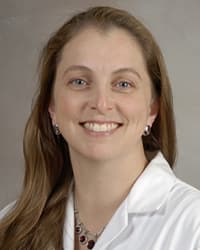
All quotes in this story are from Sasha Adams, MD, FACS, Professor and Vice Chair for Surgical Education at McGovern Medical School at UTHealth Houston and Program Director of its General Surgery Residency (profile). We spoke with her at the program’s October 2026 check-in, as it renewed for a second year on Chiefly.
- Program
- General Surgery Residency, McGovern Medical School at UTHealth Houston
- Who ran scheduling
- Sasha Adams, MD, FACS, the program director, and Nicholas Johnson, MD, the chief resident
- Before Chiefly
- Excel templates and a master calendar; hours of rework per change; staffing mistakes surfacing into April and May
- With Chiefly
- Schedule re-runs in minutes; no understaffing surprises this year
- Services
- Trauma, emergency general surgery, burn, colorectal and others, each reading its residents off the program’s master calendar
What results did UTHealth Houston see with Chiefly?
Why did UTHealth Houston renew?
The program has renewed for a second year. Its rules, residents and settings roll over to the next build, and with Dr. Johnson graduating, their Chiefly scheduling advisor trains the next chief on a schedule that already encodes how the program works. Dr. Adams, who had handed the tool to her chief, put the case for it more plainly to colleagues at a surgical education conference.
“I was at a [conference] … I was like, oh, you need to go see if there’s a Chiefly booth. [Chiefly’s] doing my schedule now, and it’s freaking awesome.”
What makes a general surgery schedule hard to build?
A general surgery residency schedules by service: trauma, emergency general surgery, burn, colorectal and others, each with its own staffing needs and its own Excel block. Some services lean on others for call; at UTHealth Houston, colorectal residents cover a night of emergency general surgery call each week. Off-service rotators come and go mid-month, and preliminary residents have about five required rotations and seven that can move. All of it rolls up into a master calendar every service reads from.
“It’s just so much more complex than our brains can do.”
Before Chiefly, the chiefs and Dr. Adams built it by hand. The build itself was only part of the cost. The rest came later, as changes broke rules nobody noticed until a service came up short.
“Usually we start fine, and then we start tinkering, and then we break our rules. We didn’t know we broke our rules, and we understaffed one thing … I was battling that even up until April and May of last year.”
Can Chiefly handle a surgery program?
Yes. A surgery program runs on different rules: service-based staffing, off-service rotators and prelim tracks with real variability. UTHealth Houston was Chiefly’s first general surgery program, and Chiefly built what it needed.
“[From] where you started with this, you’ve made it far more easy to use with the different training requirements.”
The same ACGME requirements apply to every surgery program, but how each program turns them into a schedule varies, and that is where a scheduling team earns its keep. Rules that exist for one surgical program now exist for the next.
“We all have the same ACGME rules, but our way of manifesting that into our schedules is very different, and our demands are very different. … We have a very different situation than probably a lot of different surgical [programs], but your ability to adapt to that makes it really helpful.”
How fast are schedule changes in Chiefly?
The 2026-27 block schedule was built on Chiefly by one chief resident, Nicholas Johnson, MD, with Dr. Adams reviewing. Her review loop is where the time went before.
“It was so much faster and less painful than every year before. … I’d look at it, they’d send me the thing, and I’d say, wait, we needed to fix this part. Maybe that was a rule we hadn’t clarified. Then he’d send me another one in an hour, because he went in and changed the rule, or the person … and it was done. As opposed to before, when it was hours of mind-numbing, what did I screw up now? … Fixing the things and then making the rest of it still function: that was the most absolute massive time save.”
As everyone who schedules knows, the schedule is never finished. Someone leaves on emergency family leave, a leave lands in March and the April schedule has to absorb it. Those used to be the painful part.
For a quick swap, they made the change by hand. Anything bigger went back through Chiefly, so every rule got checked again.
“Sometimes we’d just stare at it for a minute, see a quick fix, change it … But anything that was more than a quick swap, we had to run it again to make sure we hadn’t thrown anything else off.”
What changed in the first year?
The clearest change wasn’t the build. It was what didn’t happen afterwards: no discovering in April that a service was short, or that a resident had missed a required rotation.
“Those realizations that we had last year, I know for sure, I haven’t had yet. I haven’t had one of those yet … I’ve had some tinkering stuff, but I haven’t had a “we screwed up.””
How much help did they need from Chiefly?
As much as they wanted. Chiefly’s team loaded the program’s rules from its spreadsheets and templates, and their scheduling advisor was there for anything. Most days, the chief resident ran it himself, adding rules as they surfaced and re-running the schedule.
“You know, we tend to be people that just take care of ourselves, so maybe we didn’t ask a whole lot. I’m just looking back through some of my emails with Nick … He’s like, I updated Chiefly [and] Excel with this rule, this rule, this rule … did this, did this, did this. … He just filled things in as we got them. … It looks like it went very easy.”
Every Chiefly program gets a dedicated scheduling advisor who will walk you through anything, or step back and let you cook (service or software: why not both?).
If your program is surgical and your schedule runs by service, with rotators, prelims and cross-cover, here is how a build with Chiefly works.
Frequently asked questions
Yes. Chiefly builds general surgery schedules the way surgery runs: by service, with off-service rotators and preliminary residents whose rotations can move, and every assignment checked against ACGME and program rules. UTHealth Houston’s general surgery residency (trauma, emergency general surgery, burn, colorectal and other services) built its block schedule on Chiefly and renewed for a second year, and the rules Chiefly built for its training requirements now carry over to other surgery programs.
Minutes. In Chiefly, the chief changes the rule or the person and re-runs the schedule in minutes, with every rule checked again. At UTHealth Houston, when the program director spotted a problem in a draft, the chief resident sent her a revised version within the hour. Before, each fix meant hours of rework in Excel and the risk of breaking something else.
Chiefly re-checks the whole year. The chief makes the change, whether a leave or a swap, and re-runs the schedule; every rule is checked again across every block, so a fix in one place doesn’t leave a service short somewhere else. At UTHealth Houston, a revised draft came back within an hour of the program director’s notes.
No. Chiefly’s team loads a program’s rules from its existing spreadsheets and templates, and the software builds the schedule. At UTHealth Houston a program director and one chief resident ran it from there, adding rules as they came up and re-running it themselves, with few requests to Chiefly.
Its program director described the year as “so much faster and less painful than every year before”: revised schedules in an hour and no understaffing surprises, where the previous year’s had surfaced into April and May. The rules now roll over to the next build and the next chief resident.
Sources
Keep reading
All posts
Boston Children’s signs a multi-year deal with Chiefly after automating its block schedule
How a 188-resident program across two hospitals built a fully ACGME-compliant block schedule in a week.
Read the case studyChildren’s National forms a five-year partnership to use Chiefly. Find out why.
One chief built the 2026-27 block schedule three months early, then residents traded blocks in the Swap Portal with no emailing back and forth. The chief who ran it on why Children’s National is staying for five years.
Read the case studyChildren’s National pilots Chiefly’s Swap Portal: never-before flexibility for residents, 85% took part, ~350x less admin time
Residents had never been allowed to trade their own blocks. In one month in the Swap Portal, 85% of those who could took part, 67 shaped their own schedules, and the chiefs spent an hour or less reviewing all of it.
Read the case study
Chiefly helps Augusta University’s family medicine residency navigate a 30% complement increase
Two people, 49 residents, a 30% jump in headcount, and not one re-run request to Chiefly. How Augusta’s family medicine residency runs its own rotation calendar.
Read the case study
From overwhelmed to empowered: how UVA Pediatrics chiefs reclaimed 3 months of time
From a spreadsheet that ate hundreds of chief hours to a block schedule built in a week and a half.
Read the case study
Welcoming Alexandra Martinson, MD
Welcoming Alexandra Martinson, MD: a chief resident who speaks code
A 2025-26 Children’s National chief resident with a computer science degree and research in AI for medicine.
Read the announcement

Welcoming our new advisors

Announcing our new advisors, with tangible impacts for chiefs, PDs, and DIOs
Boston Children’s Innovation & Digital Health Accelerator, plus advisors in fairness, compliance, and accreditation.
Read the announcement
Germane Solutions invests in Chiefly and uses it to help its clients
The GME consulting firm connected to 40%+ of the GME market met Chiefly while modeling UVA Health’s complement increase. Now it’s an investor and a user.
Read the announcement
QGenda alternatives for residency programs: Chiefly vs QGenda
Chiefly automates residency block, daily, clinic and call scheduling, all integrated; QGenda schedules whole health systems. Here is how they compare for residency programs.
Read the comparison
Amion alternatives for residency programs: Chiefly vs Amion
Chiefly automates the residency block, daily, clinic and call schedules; Amion is used mainly for publishing call and who’s on call. Here is how they compare.
Read the comparisonExcel vs residency scheduling software: Chiefly vs Excel
How long Excel residency schedules take, where they break, and when it’s time to move off the spreadsheet.
Read the comparisonACGME duty hour rules for residents (2026): 80 hours, 24+4 and the proposed changes
Every ACGME duty hour rule a residency schedule has to respect, with the 2026 section numbers, how averaging works, and what the proposed changes would mean.
Read the guideResidency block schedule software: build the rotation schedule from your rules
Chiefly builds your residency block and rotation schedule from your program’s rules, rolls it over each year, and keeps it compliant as the year changes.
Read the guideHow chief residents make the block schedule, step by step
A step-by-step guide to building a residency block schedule: what to gather, the order to build in, the rules to check, and how to publish it.
Read the guideResidency scheduling service or software: why not both?
Chiefs shouldn’t have to build the schedule by hand, but they should keep control of it. Why the answer is software and a service, and how the four ways to make a residency schedule compare.
Read the guideMaternity and parental leave in residency: ACGME rules and who covers the schedule
What the ACGME requires for medical, parental and caregiver leave, how leave affects duty hours and training time, and how programs cover the schedule.
Read the guideBest residency scheduling software: how to choose in 2026
In most programs the year is still planned and built in Excel, and the scheduling tools mostly publish it. How to choose software for the half of the job that takes the time.
Read the guideWhat is an X+Y schedule in residency? 4+1 and 6+2 explained
How X+Y schedules such as 4+1 and 6+2 separate inpatient and clinic time, why programs adopt them, and how to build one.
Read the guideCan ChatGPT build a residency schedule?
What happens when chiefs use ChatGPT or Claude to build resident schedules, where they break, and what to use instead.
Read the guide