
Germane Solutions invests in Chiefly and uses it to help its clients
Germane Solutions, the GME consulting firm behind 420+ new program accreditations, has invested in Chiefly. Read more about who Germane is, how we met while modeling UVA Health’s complement increase, and what the partnership means for Chiefly and its clients.

Germane Solutions, an academic medicine and GME consulting firm whose work includes 54 new sponsoring institutions and 420+ new program accreditations, has invested in Chiefly and uses it to help its clients. We met at UVA Health, where Lauren Ferguson, MD, the wife of one of our co-founders, used Chiefly to aid in the decision around a complement scenario.
Who is Germane Solutions?
Germane Solutions, founded 20+ years ago, is a consulting firm focused on academic medicine and graduate medical education (GME). It advises hospitals and health systems on GME strategy, finance, operations and accreditation, from building new teaching hospitals to running GME operations and planning the clinical workforce (Germane Solutions).
Germane Solutions has an incredible amount of industry reach and knowledge. Here are some numbers:
Its new-program work includes 254+ programs in key specialties, among them internal medicine, family medicine, surgery, emergency medicine, psychiatry, OB/GYN, and anesthesiology.
How did Chiefly and Germane Solutions meet?
At UVA Health. Germane was consulting for UVA on whether a residency complement increase was feasible, and they were working with Lauren Ferguson, MD, a chief resident at the time. Lauren is also the wife of our co-founder, Mark. Her year of building schedules in Excel is why Chiefly exists.
A complement increase only works if the schedule still works with more residents: every rotation staffed, every ACGME requirement met, every clinic week covered. So for each scenario on the table, Lauren built the full year in Chiefly and handed Germane the schedule. Each new version came back instantly, which kept the discussion on real schedules instead of estimates.
The hospital approved the increase (UVA Pediatrics case study). As Lauren puts it:
“We could quickly build a full schedule for every scenario and show what would work and what wouldn’t. That’s what made our case.”
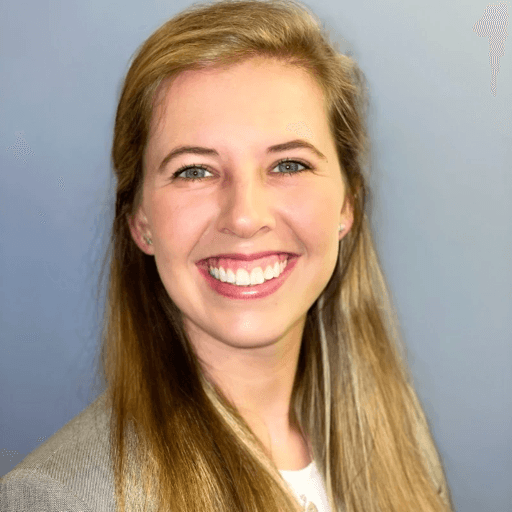 Lauren Ferguson, MD, former chief resident, UVA Pediatrics
That’s how we met Germane. A year later, Germane is both an investor in Chiefly and a user of it: its team has used Chiefly across multiple client engagements to give clients deeper, quicker analysis.
What does this partnership mean for Chiefly?
- We’re closer to what programs need. Germane works across more than 40% of GME, and building alongside them keeps Chiefly grounded in the problems programs actually bring. One lesson already: a schedule is evidence. Complement, funding and new-program decisions are made in front of hospital leadership, and a complete, rule-checked schedule persuades in a way an estimate can’t.
- We reach more programs, in more specialties. Germane’s work spans 44+ specialties and hundreds of new programs, and every new program has to build its first schedule from scratch.
- Germane’s clients are becoming Chiefly users. Programs Germane works with now build and test their schedules in Chiefly.
Can my program model a complement increase the same way?
Yes. In Chiefly you change staffing or rules, for example adding residents to a class, and re-generate the whole year instantly. Every version is saved, so you can compare scenarios side by side (scenario testing). Our team loads your rules first, so each scenario follows your program’s rules and ACGME requirements (how Chiefly builds the block schedule).
Frequently asked questions
Yes. Germane Solutions, a consulting firm focused on academic medicine and graduate medical education, has invested in Chiefly and uses it to help its clients. The relationship began at UVA Health, where Germane was studying a residency complement increase and the program’s chief resident modeled each scenario in Chiefly.
Germane Solutions is a consulting firm focused on academic medicine and graduate medical education. It is actively connected to more than 40% of the GME market and averages 140 engagements a year. Its work developing new programs includes 54 new sponsoring institutions, 420+ new program accreditations and 8,300 new trainee positions across 44+ specialties.
It keeps Chiefly closer to what programs need and brings it to more of them. Germane works across more than 40% of GME and 44+ specialties, programs it works with now use Chiefly, and new programs it helps launch can build their first schedules in Chiefly from their own rules.
A complement increase only works if the schedule still works: every rotation staffed, every ACGME requirement met and clinic weeks covered with the larger class. In Chiefly, a program changes staffing or rules and re-generates the full year instantly, so each scenario comes with a real schedule instead of an estimate. UVA’s increase was approved after modeling it this way.
Sources
Keep reading
All posts
Welcoming Alexandra Martinson, MD
Welcoming Alexandra Martinson, MD: a chief resident who speaks code
A 2025-26 Children’s National chief resident with a computer science degree and research in AI for medicine.
Read the announcement

Welcoming our new advisors

Announcing our new advisors, with tangible impacts for chiefs, PDs, and DIOs
Boston Children’s Innovation & Digital Health Accelerator, plus advisors in fairness, compliance, and accreditation.
Read the announcement
Boston Children’s signs a multi-year deal with Chiefly after automating its block schedule
How a 188-resident program across two hospitals built a fully ACGME-compliant block schedule in a week.
Read the case studyChildren’s National forms a five-year partnership to use Chiefly. Find out why.
One chief built the 2026-27 block schedule three months early, then residents traded blocks in the Swap Portal with no emailing back and forth. The chief who ran it on why Children’s National is staying for five years.
Read the case study
UTHealth Houston’s general surgery residency renews with Chiefly. Its program director explains why.
Chiefly’s first surgical program: a revised schedule back in an hour instead of hours in Excel, no understaffing surprises this year, and a scheduling advisor whenever they wanted one.
Read the case studyChildren’s National pilots Chiefly’s Swap Portal: never-before flexibility for residents, 85% took part, ~350x less admin time
Residents had never been allowed to trade their own blocks. In one month in the Swap Portal, 85% of those who could took part, 67 shaped their own schedules, and the chiefs spent an hour or less reviewing all of it.
Read the case study
Chiefly helps Augusta University’s family medicine residency navigate a 30% complement increase
Two people, 49 residents, a 30% jump in headcount, and not one re-run request to Chiefly. How Augusta’s family medicine residency runs its own rotation calendar.
Read the case study
From overwhelmed to empowered: how UVA Pediatrics chiefs reclaimed 3 months of time
From a spreadsheet that ate hundreds of chief hours to a block schedule built in a week and a half.
Read the case study
QGenda alternatives for residency programs: Chiefly vs QGenda
Chiefly automates residency block, daily, clinic and call scheduling, all integrated; QGenda schedules whole health systems. Here is how they compare for residency programs.
Read the comparison
Amion alternatives for residency programs: Chiefly vs Amion
Chiefly automates the residency block, daily, clinic and call schedules; Amion is used mainly for publishing call and who’s on call. Here is how they compare.
Read the comparisonExcel vs residency scheduling software: Chiefly vs Excel
How long Excel residency schedules take, where they break, and when it’s time to move off the spreadsheet.
Read the comparisonACGME duty hour rules for residents (2026): 80 hours, 24+4 and the proposed changes
Every ACGME duty hour rule a residency schedule has to respect, with the 2026 section numbers, how averaging works, and what the proposed changes would mean.
Read the guideResidency block schedule software: build the rotation schedule from your rules
Chiefly builds your residency block and rotation schedule from your program’s rules, rolls it over each year, and keeps it compliant as the year changes.
Read the guideHow chief residents make the block schedule, step by step
A step-by-step guide to building a residency block schedule: what to gather, the order to build in, the rules to check, and how to publish it.
Read the guideResidency scheduling service or software: why not both?
Chiefs shouldn’t have to build the schedule by hand, but they should keep control of it. Why the answer is software and a service, and how the four ways to make a residency schedule compare.
Read the guideMaternity and parental leave in residency: ACGME rules and who covers the schedule
What the ACGME requires for medical, parental and caregiver leave, how leave affects duty hours and training time, and how programs cover the schedule.
Read the guideBest residency scheduling software: how to choose in 2026
In most programs the year is still planned and built in Excel, and the scheduling tools mostly publish it. How to choose software for the half of the job that takes the time.
Read the guideWhat is an X+Y schedule in residency? 4+1 and 6+2 explained
How X+Y schedules such as 4+1 and 6+2 separate inpatient and clinic time, why programs adopt them, and how to build one.
Read the guideCan ChatGPT build a residency schedule?
What happens when chiefs use ChatGPT or Claude to build resident schedules, where they break, and what to use instead.
Read the guide